Chapter Overview
Between the 1820s and the 1850s, a wave of reform movements swept across the United States. Fueled by religious revivals that told Americans they could build a perfect society, ordinary people organized to fight slavery, demand equal rights for women, improve public education, ban alcohol, and reform prisons. These movements were radical for their time. Abolitionists declared that slavery was a sin. Women demanded the right to vote. Reformers insisted that society had a duty to care for the mentally ill and educate every child. Not everyone agreed. Reform generated fierce backlash, and even reformers themselves struggled with prejudice and division. But the movements of this era planted seeds that would shape American democracy for generations.
Big Questions
- How did religious revivals inspire movements for social change?
- Why did some Americans risk their lives to fight slavery, and why did others fight to preserve it?
- What did women's rights activists demand, and why was their cause so controversial?
- What were the strengths and weaknesses of the reform movements of this era?
I. Introduction: A Nation of Reformers
In the 1830s, something remarkable happened in America: thousands of ordinary people decided the world was broken and set out to fix it. They held rallies, signed petitions, published newspapers, and marched in the streets. They demanded the immediate end of slavery. They insisted that women deserved equal rights. They campaigned to shut down every tavern in the country. They built experimental communities based on shared property and cooperation. They fought to give every child a free public education.
What drove this explosion of activism? Part of the answer lay in religion. A massive wave of religious revivals known as the Second Great Awakening swept the nation in the early 1800s, preaching that every person could be saved and that Christians had a duty to improve the world. Part of the answer lay in democracy itself: the expanding right to vote in the 1820s and 1830s made ordinary Americans feel that they had the power to shape their society. And part of the answer lay in the problems created by the Market Revolution: growing inequality, dangerous working conditions, and the expanding horror of slavery.
These reform movements changed America forever. They did not solve the problems they targeted. Slavery persisted until a devastating civil war ended it. Women would not win the right to vote for another seventy years. But the reformers of this era established a tradition of grassroots activism that remains central to American democracy.
Vocabulary
Reform: The act of working to change and improve society through organized effort rather than revolution. Reformers try to fix problems within the existing system.
Activism: The practice of taking action to bring about social or political change, such as organizing protests, writing petitions, or publishing newspapers.
Grassroots: Describes movements that are driven by ordinary people at the local level, rather than by powerful leaders or politicians at the top.
II. The Second Great Awakening
Revival Fires
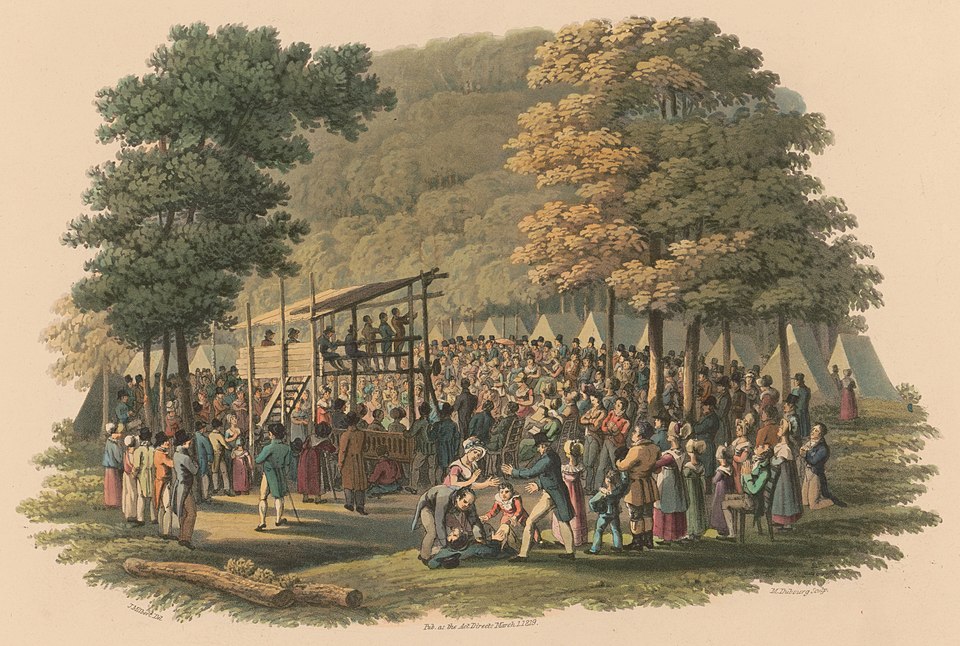
In the early 1800s, a new wave of religious energy rolled across the United States. Preachers held massive outdoor gatherings called camp meetings, where thousands of people came together to pray, sing, and listen to fiery sermons that lasted for hours. These revivals were emotional, dramatic events. People wept, shouted, fainted, and experienced what they described as spiritual rebirth. Unlike the stiff, formal church services of earlier generations, these revivals were open to everyone: men and women, Black and white, rich and poor.
The camp meeting at Cane Ridge, Kentucky, in 1801 attracted an estimated 20,000 people, making it one of the largest gatherings in American history up to that point. The Second Great Awakening spread rapidly through the South and the frontier before sweeping into the cities of the Northeast.
Charles Finney and the New Revivalism
The most influential preacher of the era was Charles Grandison Finney, a former lawyer who became the greatest evangelist of his generation. Finney held revivals across upstate New York, a region so intensely affected by religious fervor that it became known as the "Burned-Over District." Finney preached a revolutionary message: salvation was not predetermined by God but was a choice that every individual could make. People were not helpless sinners waiting for God's mercy. They had free will. They could choose to be saved.
This was a powerful idea with enormous consequences. If individuals could choose to save themselves, they could also choose to save the world. Finney told his followers that true Christians had a duty to fight sin wherever they found it, whether in their own hearts, in their communities, or in their nation. He openly supported the abolition of slavery and allowed women to pray aloud in his meetings, which was shocking at the time.
Story Behind the Story: The Burned-Over District
Upstate New York earned its nickname because the fires of religious revival burned so intensely there. But why this particular region? The answer lies partly in the Erie Canal. The canal, completed in 1825, brought rapid economic change to the area. Quiet farming villages were suddenly connected to national markets. Some people grew wealthy overnight; others lost their livelihoods. In the midst of this upheaval, people searched for meaning and community. Revivals offered both. The same region that burned with religious passion also gave birth to the Mormon faith (founded by Joseph Smith in Palmyra, New York, in 1830), the Millerite movement (which predicted the end of the world in 1844), and a wide array of utopian experiments. It was one of the most spiritually creative places in American history.
Perfectionism: Building Heaven on Earth
The Second Great Awakening promoted an idea called perfectionism: the belief that human beings and human society could be made perfect. This was not about being flawless in a small way. Perfectionists believed that if enough people committed themselves to fighting sin and doing good, they could literally create a heaven on earth. Poverty could be eliminated. Ignorance could be overcome. Even slavery, the nation's greatest sin, could be abolished.
This idea was the engine that powered the reform movements of the 1830s, 1840s, and 1850s. Abolitionists, women's rights activists, temperance crusaders, and education reformers all drew energy from the conviction that the world could be made better and that they had a Christian duty to make it so.
Key Idea: From Personal Salvation to Social Reform
The Second Great Awakening created a direct path from religious faith to political activism. The logic worked like this: (1) Every person can choose to be saved. (2) Saved Christians have a duty to fight sin. (3) Slavery, poverty, ignorance, and injustice are sins. (4) Therefore, true Christians must work to end slavery, poverty, ignorance, and injustice. This chain of reasoning turned churchgoers into activists and prayer meetings into reform organizations. It is one of the most important connections between religion and politics in American history.
Vocabulary
Second Great Awakening: A wave of religious revivals that swept the United States from the 1790s through the 1840s, emphasizing personal salvation through free will and inspiring many social reform movements.
Camp meeting: A large outdoor religious gathering, often lasting several days, where preachers delivered sermons and participants experienced emotional spiritual conversions.
Perfectionism: The belief that human beings and society can be made morally perfect through effort and faith. This idea motivated many reform movements of the era.
Evangelical Christianity: A form of Protestant Christianity that emphasizes personal conversion (being "born again"), the authority of the Bible, and the duty to spread the faith and improve the world.
Stop and Think
The Second Great Awakening told people they had the power to choose their own salvation and to change the world for the better. How might that message have been especially appealing to people whose lives had been disrupted by the rapid changes of the Market Revolution?
III. Abolitionism
The Radical Demand: Immediate Emancipation
Opposition to slavery was not new in the 1830s. Quakers had spoken against it since the colonial era, and the Northern states had gradually abolished slavery after the American Revolution. But earlier opponents of slavery had often been cautious, calling for gradual emancipation or colonization, which meant sending freed Black people to Africa. The American Colonization Society, founded in 1816, promoted this approach. It appealed to some whites who opposed slavery but did not want to live alongside free Black people.
The new abolitionists of the 1830s rejected gradualism and colonization. They demanded immediate, unconditional emancipation. They declared that slavery was not merely an unfortunate institution that might someday fade away. It was a sin, a moral abomination that had to be destroyed now. This was a radical position. It made abolitionists some of the most hated people in America.
William Lloyd Garrison and The Liberator
The most famous white abolitionist was William Lloyd Garrison, a printer from Massachusetts who launched a newspaper called The Liberator in 1831. In his very first issue, Garrison declared: "I am in earnest. I will not equivocate. I will not excuse. I will not retreat a single inch. AND I WILL BE HEARD." For the next 35 years, Garrison published The Liberator without interruption, attacking slavery in the most uncompromising language imaginable.
Garrison helped found the American Anti-Slavery Society in 1833, which at its peak had over 250,000 members organized in roughly 1,350 local chapters. The Society flooded the country with pamphlets, organized speaking tours, and gathered hundreds of thousands of petition signatures demanding that Congress act against slavery. Garrison believed in moral suasion, the idea that slavery could be ended by convincing Americans that it was sinful. He refused to participate in electoral politics, arguing that the Constitution itself was a pro-slavery document, which he once publicly burned, calling it "a covenant with death and an agreement with Hell."
Frederick Douglass: The Voice of the Enslaved
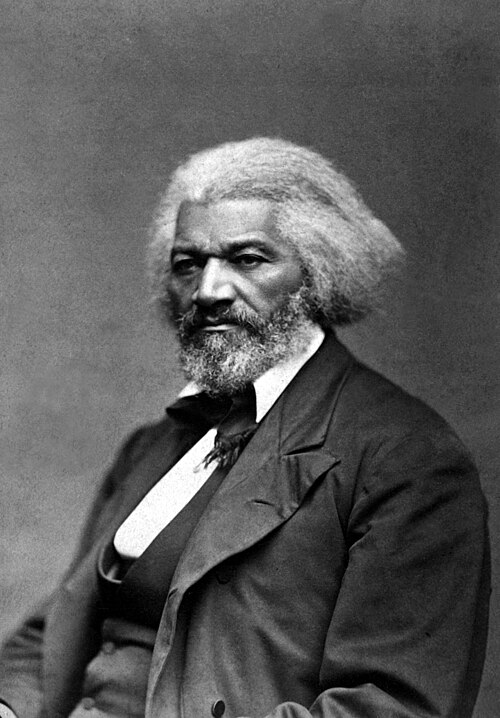
While Garrison was the most prominent white abolitionist, the movement's most powerful voice belonged to Frederick Douglass, a man who had escaped from slavery in Maryland in 1838. Douglass was a brilliant writer and one of the greatest orators in American history. When he spoke about slavery, he spoke from experience. His autobiography, Narrative of the Life of Frederick Douglass (1845), became a bestseller and one of the most important books in American literature.
Douglass initially worked with Garrison, but the two eventually split. Douglass came to believe that moral suasion alone was not enough. He argued that abolitionists should use political action, including voting and supporting antislavery candidates, to fight slavery. He founded his own newspaper, The North Star, and became an independent voice for abolition and Black rights. Unlike Garrison, Douglass believed the Constitution could be read as an antislavery document and that the political system could be a tool for liberation.
Primary Source: Frederick Douglass, "What to the Slave Is the Fourth of July?" (1852)
"What, to the American slave, is your 4th of July? I answer: a day that reveals to him, more than all other days in the year, the gross injustice and cruelty to which he is the constant victim. To him, your celebration is a sham; your boasted liberty, an unholy license; your national greatness, swelling vanity; your sounds of rejoicing are empty and heartless; your denunciations of tyrants, brass fronted impudence; your shouts of liberty and equality, hollow mockery; your prayers and hymns, your sermons and thanksgivings, with all your religious parade, and solemnity, are, to him, mere bombast, fraud, deception, impiety, and hypocrisy -- a thin veil to cover up crimes which would disgrace a nation of savages."
--Frederick Douglass, speech delivered in Rochester, New York, July 5, 1852
Black Abolitionists
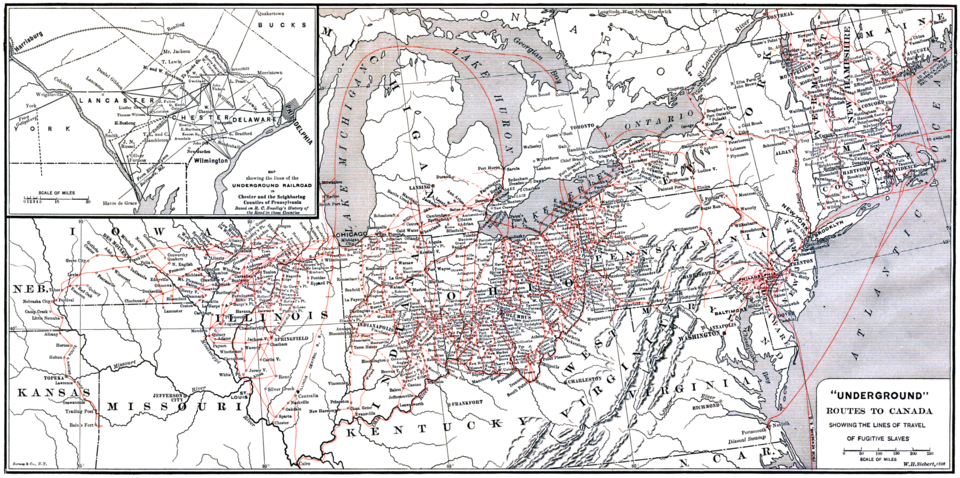
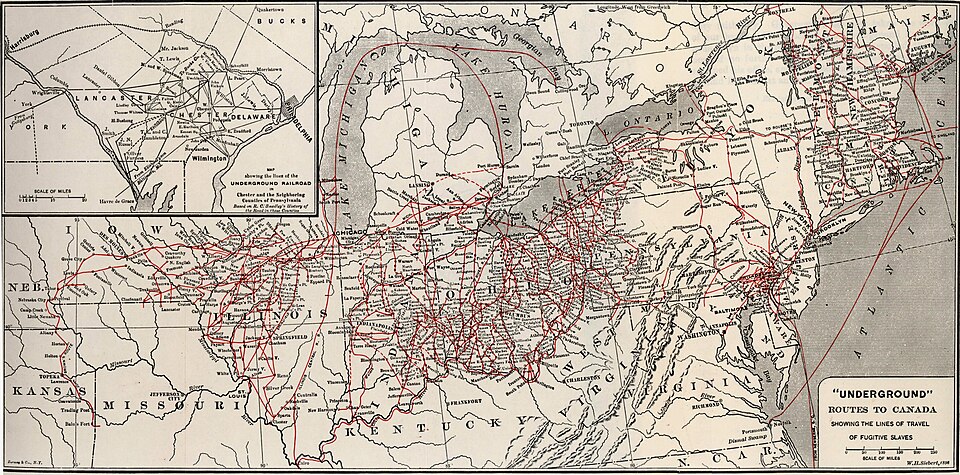
Frederick Douglass was the most famous Black abolitionist, but he was far from alone. Free Black communities in the North had been organizing against slavery long before the white abolitionist movement gained strength. Black abolitionists published newspapers, held conventions, established schools, and built networks to help enslaved people escape through the Underground Railroad. Harriet Tubman, who escaped slavery herself, made at least 13 trips back into the South and personally guided about 70 people to freedom.
Sojourner Truth, born into slavery in New York, became a powerful speaker for both abolition and women's rights.
Black abolitionists often pushed the movement to go further than white abolitionists were comfortable going. They demanded not just the end of slavery but full racial equality, including voting rights, equal education, and an end to discrimination. Many white abolitionists supported ending slavery but still believed Black people were inferior, creating painful tensions within the movement.
Multiple Perspectives: How Should Slavery Be Fought?
Stop and Think
Garrison believed moral suasion was the only acceptable strategy. Douglass argued for political action. Which approach do you think was more likely to succeed in ending slavery? Can you think of modern movements that face a similar debate between moral persuasion and political strategy?
IV. Women's Rights
From Abolition to Women's Rights
Many of the women who joined the abolitionist movement discovered something uncomfortable: the same society that denied freedom to enslaved people also denied basic rights to women. Women could not vote. In most states, married women could not own property, sign contracts, or keep their own wages. Women were barred from most colleges and professions. If a husband was abusive, his wife had almost no legal recourse. Women who dared to speak in public were mocked and condemned.
The abolitionist movement became a training ground for women's rights activists. Women like Lucretia Mott and Elizabeth Cady Stanton learned to organize, petition, fundraise, and speak in public. They also learned firsthand what it felt like to be told that their voices did not matter. In 1840, Mott and Stanton attended the World Anti-Slavery Convention in London, only to be told that women delegates would not be allowed to participate. They were forced to sit behind a curtain, silenced at a meeting dedicated to human freedom. That humiliation helped spark the women's rights movement.
The Seneca Falls Convention, 1848
On July 19-20, 1848, about 300 people gathered at a small chapel in Seneca Falls, New York, for the first women's rights convention in American history. The event was organized by Elizabeth Cady Stanton and Lucretia Mott. Stanton, a brilliant writer and strategist, drafted the convention's defining document: the Declaration of Sentiments.
The Declaration of Sentiments was modeled directly on the Declaration of Independence. Where Jefferson had written "All men are created equal," Stanton wrote "All men and women are created equal." The document listed grievances against men's domination of women, just as Jefferson had listed grievances against King George III. It demanded property rights, educational opportunity, and access to professions. Its most controversial demand was the right to vote, which even some supporters of women's rights considered too radical.
Frederick Douglass attended the Seneca Falls Convention and spoke eloquently in favor of women's suffrage, helping the resolution pass. About 100 of the 300 attendees signed the Declaration of Sentiments. It was a small beginning, but it launched a movement that would transform American democracy.
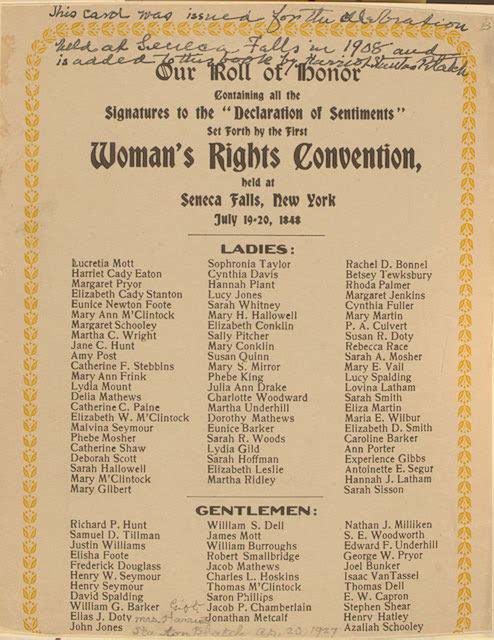
Primary Source: The Declaration of Sentiments (1848)
"We hold these truths to be self-evident: that all men and women are created equal; that they are endowed by their Creator with certain inalienable rights; that among these are life, liberty, and the pursuit of happiness..."
"The history of mankind is a history of repeated injuries and usurpations on the part of man toward woman, having in direct object the establishment of an absolute tyranny over her. To prove this, let facts be submitted to a candid world."
"He has never permitted her to exercise her inalienable right to the elective franchise. He has compelled her to submit to laws, in the formation of which she had no voice... He has made her, if married, in the eye of the law, civilly dead."
--Elizabeth Cady Stanton, Declaration of Sentiments, Seneca Falls Convention, July 1848
Sojourner Truth
One of the most powerful voices in both the abolitionist and women's rights movements belonged to Sojourner Truth. Born into slavery in New York around 1797 with the name Isabella Baumfree, she gained her freedom in 1827 when New York abolished slavery. She took the name Sojourner Truth in 1843, believing God had called her to travel the land and speak the truth.
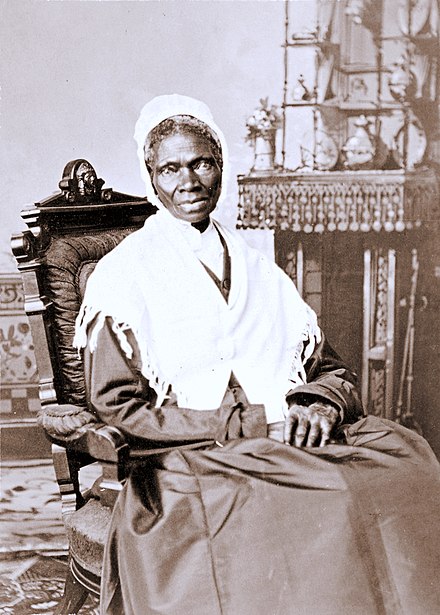
Truth could not read or write, but she was one of the most compelling speakers of her era. She stood nearly six feet tall and spoke with a deep, commanding voice. At the 1851 Women's Rights Convention in Akron, Ohio, she delivered a speech that challenged the idea that women were weak and needed to be protected. She pointed to her own life of hard labor under slavery as proof that women were as strong and capable as men. Her words cut through the polite arguments of the day and forced her audience to confront the connections between racism and sexism.
Story Behind the Story: Elizabeth Cady Stanton's Radical Declaration
When Elizabeth Cady Stanton sat down to draft the Declaration of Sentiments, she made a deliberate choice to model it on the Declaration of Independence. This was not just a literary device. It was an argument. By using Jefferson's own words and structure, Stanton was saying: the principles America was founded on apply to women too. If "all men are created equal" was truly a universal truth, then excluding half the population from its promise was a betrayal of the nation's founding ideals. The strategy was brilliant. It made it very difficult for opponents to attack the Declaration of Sentiments without also attacking the Declaration of Independence. Even so, the demand for women's suffrage was so controversial that Stanton's own husband threatened to leave town if she presented it. She presented it anyway.
Key Idea: The Language of Rights
One of the most powerful tools of reform was the language of the American Revolution itself. Abolitionists and women's rights activists used the Declaration of Independence's promise that "all men are created equal" to argue that their causes were not radical at all -- they were simply asking America to live up to its own ideals. This strategy of holding the nation accountable to its founding promises has been used by nearly every American social movement since, from the civil rights movement of the 1950s and 1960s to movements for equality today.
Vocabulary
Suffrage: The right to vote. Women's suffrage -- the campaign to win women the right to vote -- was one of the most important reform movements in American history.
Declaration of Sentiments: The document drafted by Elizabeth Cady Stanton and presented at the Seneca Falls Convention in 1848, modeled on the Declaration of Independence, demanding equal rights for women.
Convention: A formal meeting of people who share a common purpose, held to discuss issues and plan action. Reform conventions were a key organizing tool in this era.
V. Other Reform Movements
Temperance: The War on Alcohol
In the early 1800s, Americans drank a staggering amount of alcohol. The average adult consumed roughly seven gallons of pure alcohol per year -- about three times what Americans drink today. Alcohol was everywhere: at work, at meals, at social gatherings, and even at church events. Whiskey was cheaper than milk or coffee in many areas.
The temperance movement -- the campaign against alcohol -- became the largest reform movement of the era. Temperance activists, many of them women, argued that alcohol destroyed families, caused poverty, and led to violence. They had a point: domestic abuse, workplace accidents, and poverty were all closely linked to heavy drinking. The American Temperance Society, founded in 1826, attracted over a million members within a decade. Some temperance advocates pushed for moderation; others demanded complete prohibition. By the 1850s, over a dozen states had passed laws restricting or banning the sale of alcohol.
Women were especially active in the temperance movement because they bore the brunt of alcohol's damage. A drunken husband could beat his wife and children, spend the family's income on whiskey, and face almost no legal consequences. For many women, temperance was not just a moral crusade but a matter of survival.
Education Reform: Horace Mann and the Common School
In the early 1800s, there was no system of free public education in the United States. Wealthy families hired private tutors or sent their children to private academies. Poor children often received no education at all. Reformers like Horace Mann of Massachusetts believed this was a recipe for inequality and ignorance.
As Secretary of the Massachusetts Board of Education from 1837 to 1848, Mann championed the idea of "common schools" -- free, public schools open to all children, funded by taxes, and staffed by trained teachers. He argued that education was the "great equalizer" that could bridge the gap between rich and poor and prepare citizens for democracy. Mann fought for longer school years, better pay for teachers, professional training for educators, and standardized curricula.
Mann's ideas spread across the North, and by the 1850s, most Northern states had established some form of public education. But these reforms had limits. Schools in the South lagged far behind. Black children were excluded from most public schools, even in the North. And "common" schools often taught a specifically Protestant, middle-class version of American culture that marginalized immigrant and Catholic families.
Utopian Communities
Some reformers decided that existing society was beyond repair and tried to build entirely new communities from scratch. These utopian communities experimented with radical ideas about property, family, gender roles, and work. Brook Farm in Massachusetts brought together writers and intellectuals who shared labor and profits. The Oneida Community in New York practiced communal property and controversial ideas about marriage. The Shakers established communities based on celibacy, shared property, and exquisite craftsmanship. Religious communities like the Latter-day Saints (Mormons) sought to build their own ideal society, facing violent persecution as they moved from New York to Ohio to Missouri to Illinois and eventually to Utah.
Most utopian communities were small and short-lived. But they represented the reform era's most ambitious dream: that human beings could design a perfect society if they were willing to start over.
Prison Reform and Mental Health: Dorothea Dix
In the 1840s, a retired schoolteacher named Dorothea Dix visited a Massachusetts jail and was horrified by what she found. Mentally ill people were locked in cages, chained to walls, and left in darkness. They were housed alongside criminals, often in freezing, filthy conditions. There was no treatment, no care, and no hope.
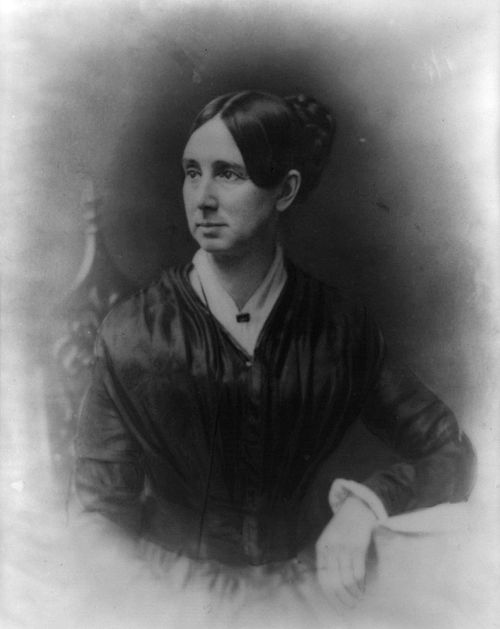
Dix devoted the rest of her life to changing this. She traveled across the country, visiting jails, poorhouses, and asylums, meticulously documenting the abuse she witnessed. She then presented her findings to state legislatures, shaming lawmakers into action. Her advocacy led to the creation of more than 30 state hospitals for the mentally ill. She also pushed for broader prison reform, arguing that the purpose of imprisonment should be rehabilitation, not just punishment.
Vocabulary
Temperance: The movement to reduce or eliminate the consumption of alcohol. Temperance activists ranged from those who urged moderation to those who demanded total prohibition.
Common school: A free, publicly funded school open to all children, regardless of social class. Horace Mann championed common schools as the foundation of democracy.
Utopian community: An intentional community designed to create a perfect or ideal society, often based on shared property, cooperative labor, or religious principles.
Rehabilitation: The idea that the purpose of punishment should be to reform and improve a person, not merely to inflict suffering. Prison reformers like Dorothea Dix championed this concept.
Stop and Think
Many different reform movements emerged in the same era. What do they all have in common? Why do you think so many people became reformers at roughly the same time?
VI. The Limits of Reform
Racism Within Reform
The reform movements of this era were genuinely radical in many ways, but they were also deeply flawed. Many white abolitionists opposed slavery but still believed that Black people were inferior. They fought to free enslaved people but resisted the idea of full racial equality. Black abolitionists like Frederick Douglass and Sojourner Truth constantly had to fight racism within the very movements that claimed to stand for freedom.
The women's rights movement was also limited by racism. The Seneca Falls Convention was an almost entirely white gathering. While some women's rights activists like Stanton worked alongside Black abolitionists, others would later turn against Black suffrage when the Fifteenth Amendment granted Black men the right to vote but not women. The alliance between abolition and women's rights, so powerful in the 1840s and 1850s, would fracture badly after the Civil War.
Violent Opposition
Reformers did not just face polite disagreement. They faced violence. In 1835, a pro-slavery mob in Boston dragged William Lloyd Garrison through the streets with a rope around his waist. In 1837, an anti-abolitionist mob in Alton, Illinois, murdered the abolitionist newspaper editor Elijah Lovejoy and destroyed his printing press. Throughout the South, it was illegal to distribute abolitionist literature, and anyone caught helping enslaved people escape could face severe punishment or death.
The backlash against reform was driven by many forces. Slaveholders had obvious economic reasons to oppose abolition. Working-class white Northerners feared that freed Black people would compete for their jobs. Many Americans saw reformers as dangerous radicals who threatened social stability, traditional gender roles, and the Constitution itself. Churches split over slavery, with Southern denominations defending it as biblically justified and Northern denominations condemning it.
The Gap Between Ideals and Practice
Even within the reform movements, there were painful contradictions. Temperance reformers sometimes displayed ugly prejudice against Irish and German immigrants, blaming their cultures for alcohol abuse. Education reformers built schools that excluded Black children and imposed Protestant values on Catholic students. Utopian communities that preached equality sometimes maintained strict hierarchies. The reformers of this era were products of their time, and their blind spots remind us that even people who fight for justice can carry prejudices they fail to see.
Multiple Perspectives: Was the Reform Movement a Success?
VII. Wrapping Up: The Unfinished Work of Reform
The reform movements of the 1820s through the 1850s represented one of the most extraordinary bursts of activism in American history. Driven by religious conviction, democratic ideals, and moral outrage, ordinary Americans organized to change the world. They demanded the end of slavery. They insisted on equal rights for women. They fought for free public education, humane treatment of the mentally ill, and the regulation of alcohol. They dared to imagine that society could be made perfect.
They did not succeed in their own time. Slavery would not end until the Civil War. Women would not gain the right to vote until 1920. Racial equality remains, to this day, an unfinished project. But the reformers of this era established patterns of activism, arguments for justice, and moral commitments that shaped every generation that followed.
Perhaps the most important legacy of the reform era was the idea that democracy is not just a system of government. It is an ongoing project, a set of promises that each generation must work to fulfill. The reformers of the 1830s, 1840s, and 1850s understood that America's founding ideals -- liberty, equality, the pursuit of happiness -- were not descriptions of reality. They were aspirations. And aspirations require action.
Whose Voices Were Left Out?
Enslaved people who resisted on their own terms: The abolitionist movement is often told as a story of free people fighting for the enslaved. But enslaved people themselves were constantly resisting: running away, slowing work, maintaining families and cultural traditions, and occasionally revolting. Their courage and agency are often overshadowed by the stories of famous white abolitionists.
Black women reformers: Women like Maria Stewart, one of the first American women of any race to lecture publicly on political issues, and Frances Ellen Watkins Harper, a poet and abolitionist speaker, made crucial contributions that were marginalized by both racial and gender prejudice. They fought on two fronts -- against slavery and racism, and against sexism within the reform movements themselves.
Working-class people skeptical of reform: Many poor and working-class Americans saw the reform movements as elite projects that ignored their struggles. They resented being told not to drink by wealthy temperance crusaders or being lectured about morality by people who had never experienced poverty. Their skepticism was often dismissed, but it reflected real tensions about who reform was truly for.
Chapter Activity: Reform Convention Simulation
The Task:
Your class will hold a mock Reform Convention set in 1850. Each student (or small group) will take on the role of one of the following figures or groups and prepare a short speech arguing for their cause.
- Frederick Douglass -- arguing for the immediate abolition of slavery through political action
- William Lloyd Garrison -- arguing for abolition through moral suasion and rejecting the Constitution
- Elizabeth Cady Stanton -- arguing for women's suffrage and equal rights
- Sojourner Truth -- arguing for both abolition and women's rights, and challenging racism within the movements
- Horace Mann -- arguing for free public education as the foundation of democracy
- Dorothea Dix -- arguing for humane treatment of the mentally ill and prison reform
- A temperance advocate -- arguing that alcohol is destroying families and communities
- A Southern slaveholder -- arguing against abolition and defending the existing social order
Guidelines:
- Use evidence from the chapter to support your arguments.
- Stay in character. Try to understand your figure's beliefs, even if you disagree with them.
- After all speeches, hold a class discussion: Which arguments were most persuasive? Which reform was most urgent? Could these different movements have worked together more effectively?
Reflection Questions:
- What made some reform arguments more persuasive than others?
- How did reformers use the language of the Declaration of Independence to support their causes?
- What reform issues from the 1840s and 1850s are Americans still debating today?
Chapter 10 Resources
Study tools and teaching materials for this chapter: